
Our Approach

Targeted genetic therapy for some of the deadliest squamous cell cancers
CXR101 is designed to disable NRF2, a key biological driver of lung, head & neck, and esophageal squamous cell cancers.
Why NRF2 Matters
NRF2 is a transcription factor chronically hyperactive in squamous tumors, driving tumor survival, treatment resistance, immune evasion, and metabolic reprogramming. The tumor cannot function without it.
Despite its importance in cancer biology, NRF2 has remained difficult to target effectively using traditional therapeutic approaches. CXR101, our lead program, is designed to change that.
Current cancer therapies largely target the mutations that initiate tumors. CXR101 targets the biology sustaining them.
Designed for localized precision, CXR101 is a genetic medicine that uses a proprietary CRISPR-based approach to knock out NRF2 directly at the tumor site via ionizable lipid nanoparticles (LNP), concentrating activity where it is needed most while limiting systemic exposure. Remove NRF2, the tumor’s survival engine, and it collapses.
For decades, treatment has relied on chemotherapy and radiation: therapies that destroy healthy tissue alongside cancerous cells and impose severe systemic toxicity. Most patients endure cycles of aggressive treatment, lose quality of life, and still face relapse.
Where conventional gene therapies target the biology that initiated the cancer, CXR101 targets what sustains it, collapsing proliferation, immune evasion, and metabolic reprogramming. CXR101 aims to ensure that patients are no longer subjected to relentless cycles of therapy that diminish the life they are fighting to preserve.

Novel Oncology Target for Genetic Medicine: NRF2 Pathway
Global regulator of stress response: NRF2 protein is a global transcriptional regulator that functions to activate genes in response to cellular stress. NRF2 maintains homeostasis in terms of normal cell behavior but can also act as an oncogene and help tumor development.
Mutational activation: Upregulation of the KEAP1/NRF2 pathway is observed in several tumor types, notably squamous cell lung cancer, and is associated with therapy resistance.
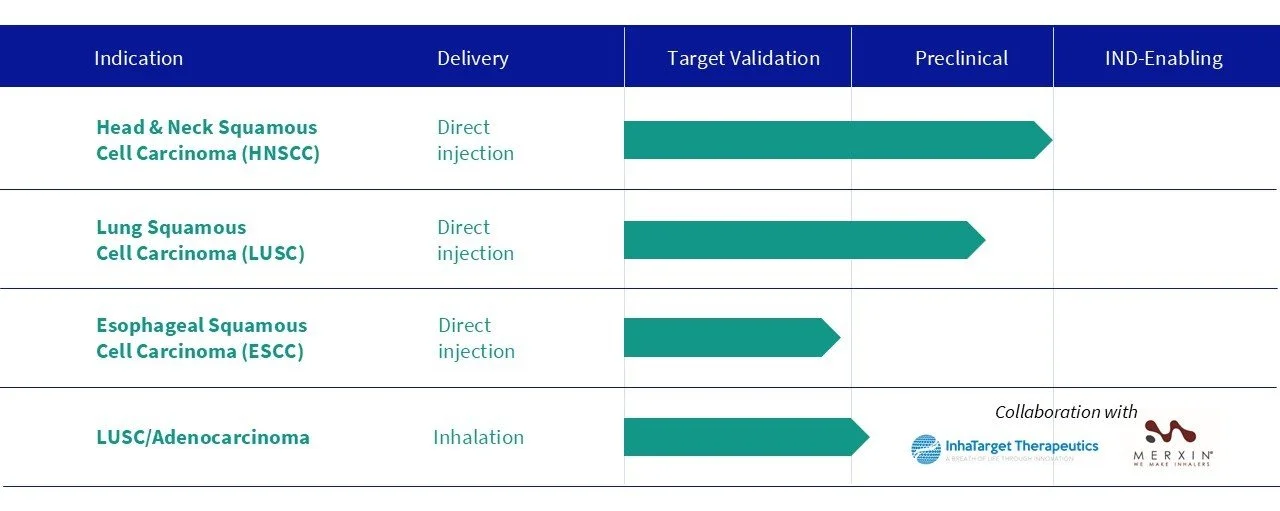
Preclinical efficacy: In Head & Neck Squamous Cell Carcinoma (HNSCC) and squamous Non-Small Cell Lung Cancer (NSCLC) in vitro and in vivo studies, our data show that disabling NRF2 leads to tumor cell death and shrinkage alone and in combination with chemotherapy and radiation.
Corrixr Development Pipeline

Contact Us
Contact us for partnership, investor or media inquiries.